Materials

The woods I use

Most of what I make comes off a local sawmill's offcut pile. Oak, walnut, sapele and iroko, sold cheap because the pieces are too short or too odd for anyone building kitchens, and otherwise headed for the burn pile.

The exotics I buy properly, in small blanks, and they only go into pens. A pen uses about as much wood as a fat marker pen. A coffee table in snakewood would cost somebody's mortgage.

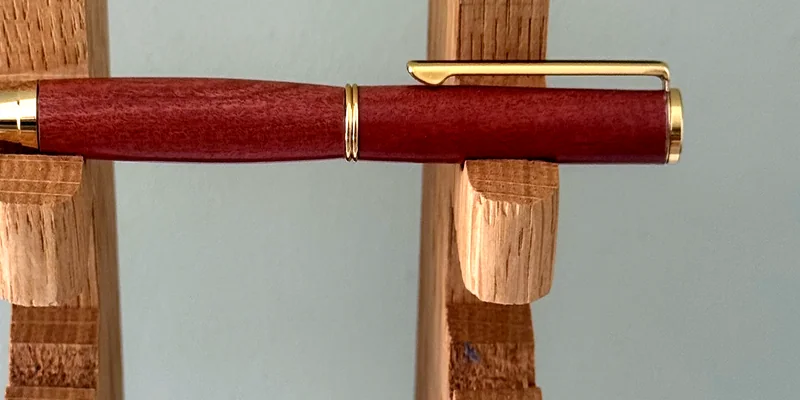
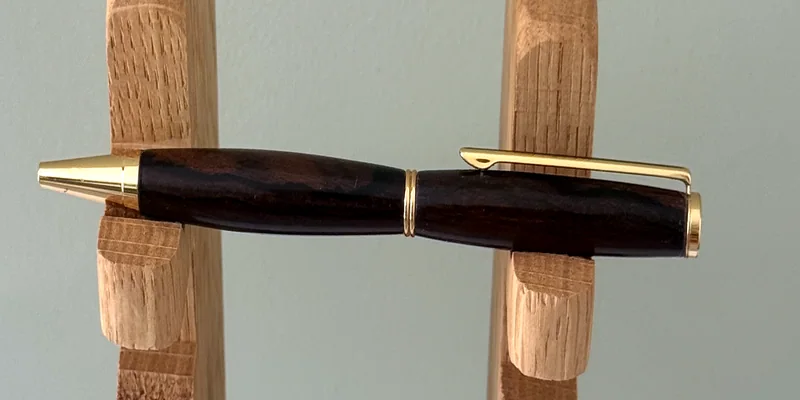
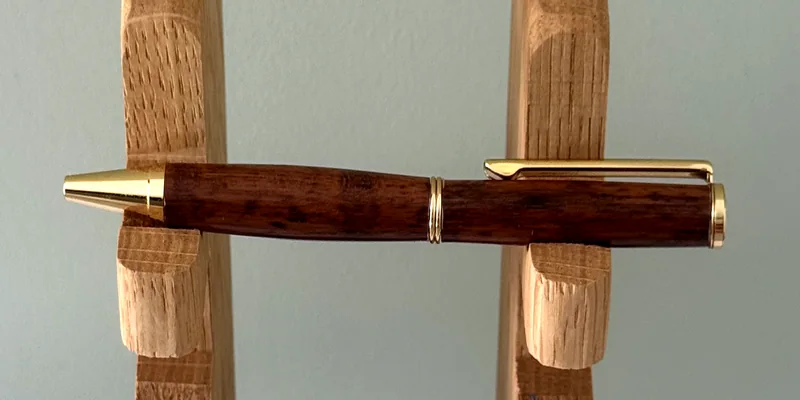
Every one of these is a real pen I turned. They show what each timber looks like made up, but no two blanks are alike and yours will have its own grain, sometimes very different from the photograph. Burrs and spalted timbers vary most. If you want something close to a particular picture, say so when you order and I'll pick a blank to match as near as I can.
No supplement

House timbers

The everyday woods, and what I have most of. Corporate orders usually end up here because a logo shows up well against them.
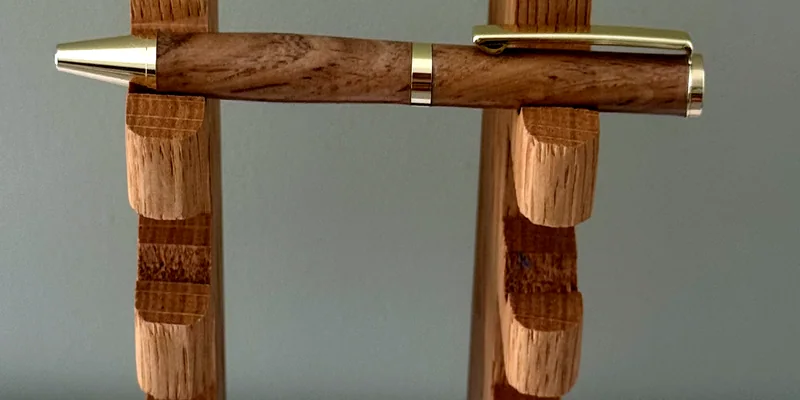
A hand-turned ballpoint pen in Oak
Oak
No supplement
Open grained and biscuit gold. The one most people picture when they picture wood.
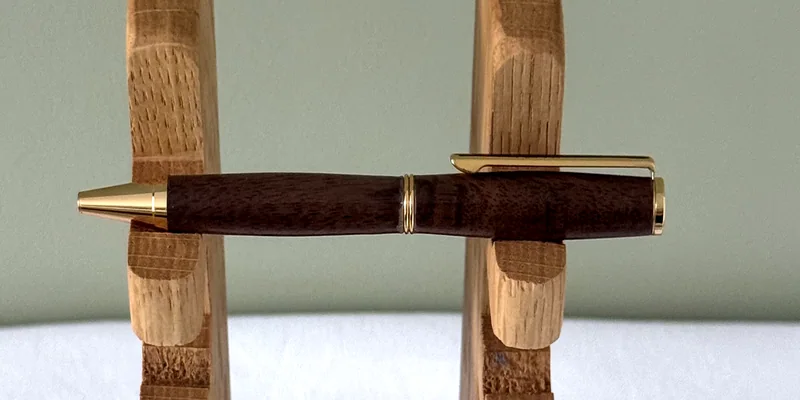
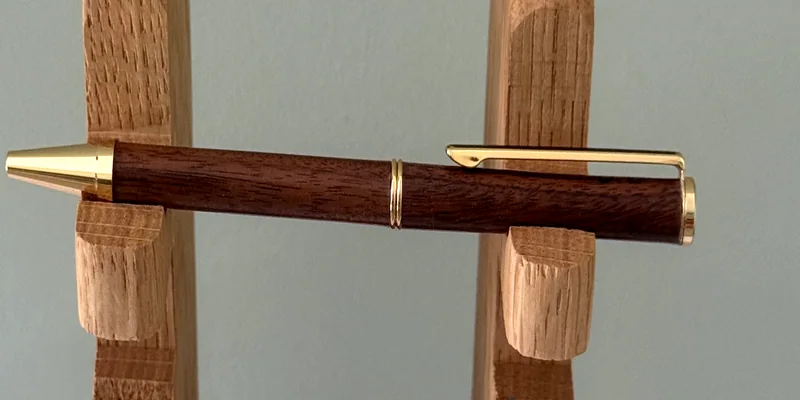
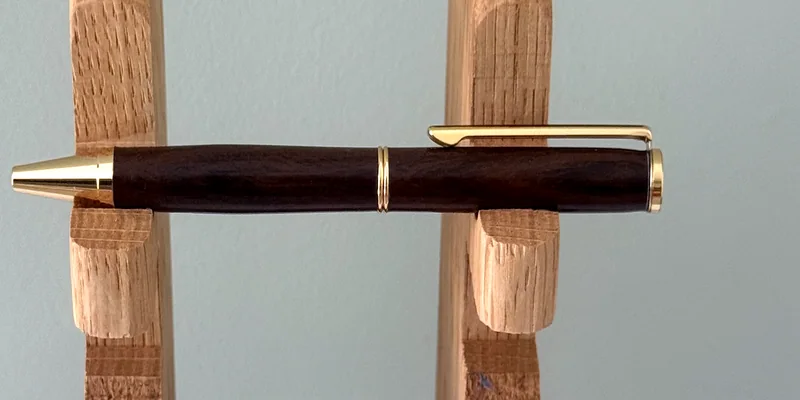
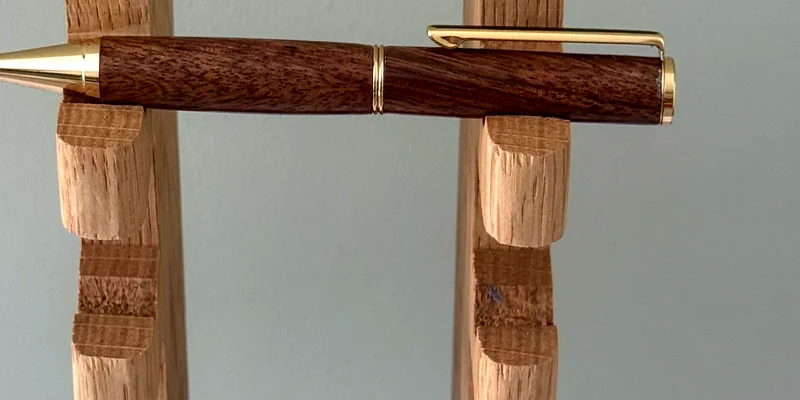
A hand-turned ballpoint pen in Walnut
Walnut
No supplement
Chocolate through to purple-grey, often with a paler streak running through it.
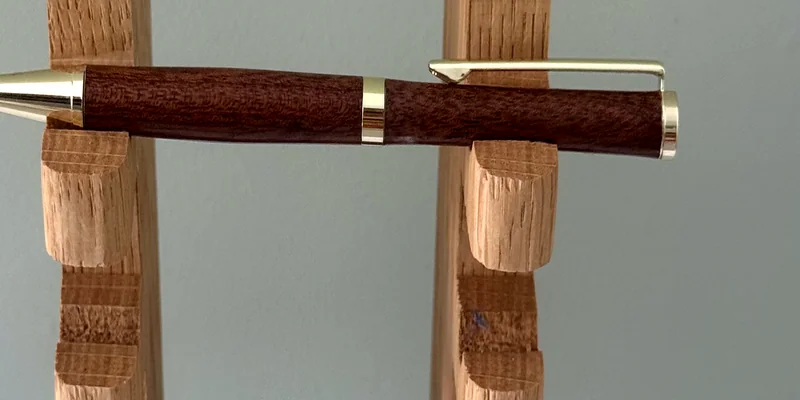
A hand-turned ballpoint pen in Sapele
Sapele
No supplement
A mahogany cousin. Deep red-brown with a ribbon figure that shifts as you turn it.
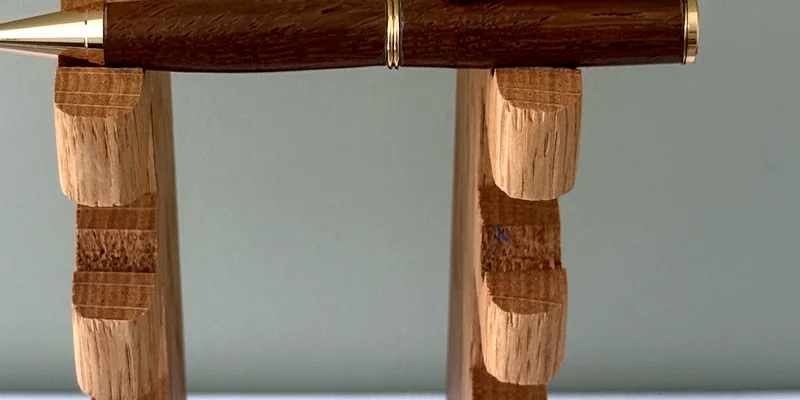
A hand-turned ballpoint pen in Iroko
Iroko
No supplement
Golden brown, hard-wearing, darkens handsomely with age.
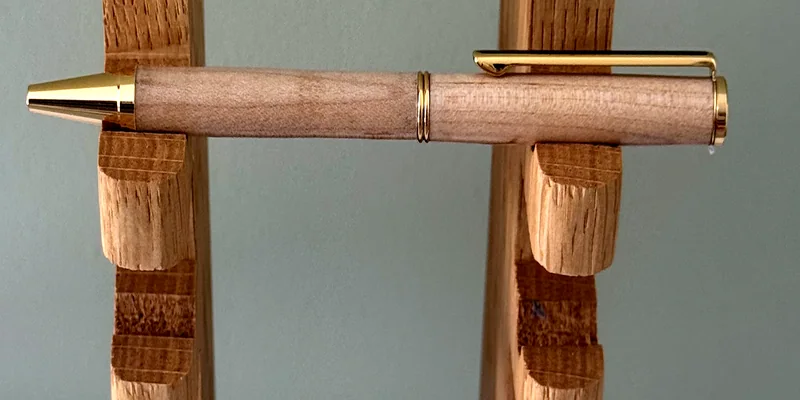
A hand-turned ballpoint pen in Maple
Maple
No supplement
Pale, close and creamy. The quietest timber here.
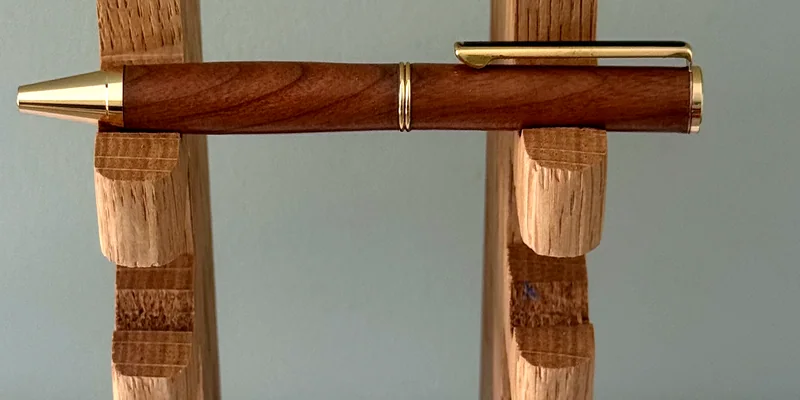
A hand-turned ballpoint pen in Cherry
Cherry
No supplement
Warm pink-brown when new, deepening to a rich amber over a few years.
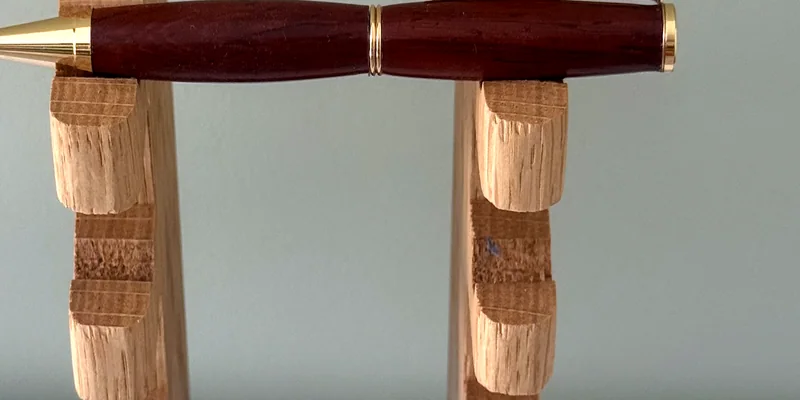
A hand-turned ballpoint pen in Padauk
Padauk
No supplement
Startlingly orange when cut, settling to a deep brick red.
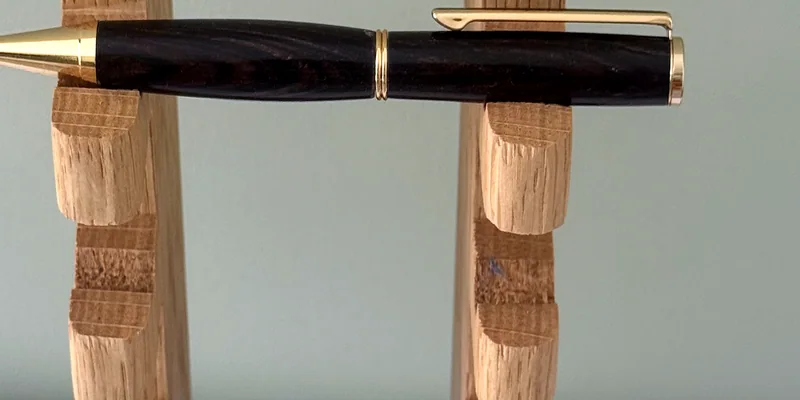
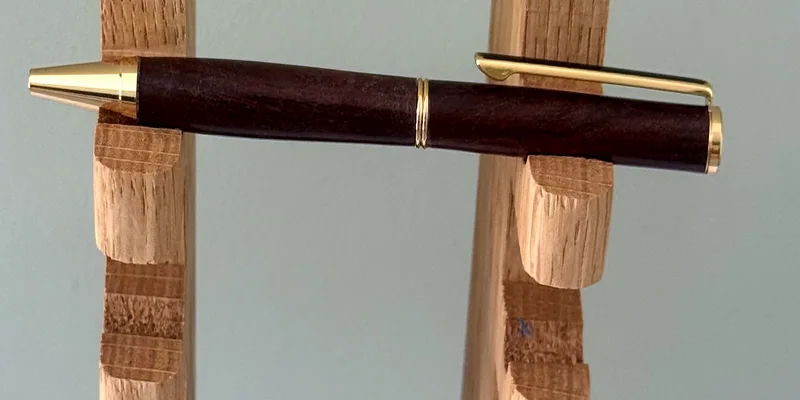
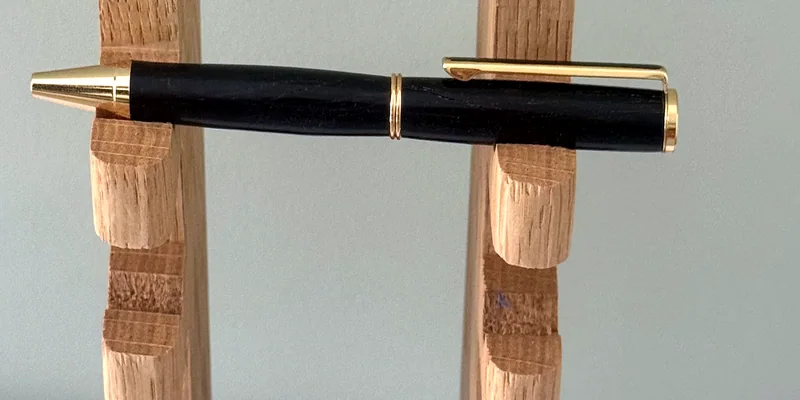
A hand-turned ballpoint pen in Wenge
Wenge
No supplement
Almost black, with fine paler lines. Sober and modern.
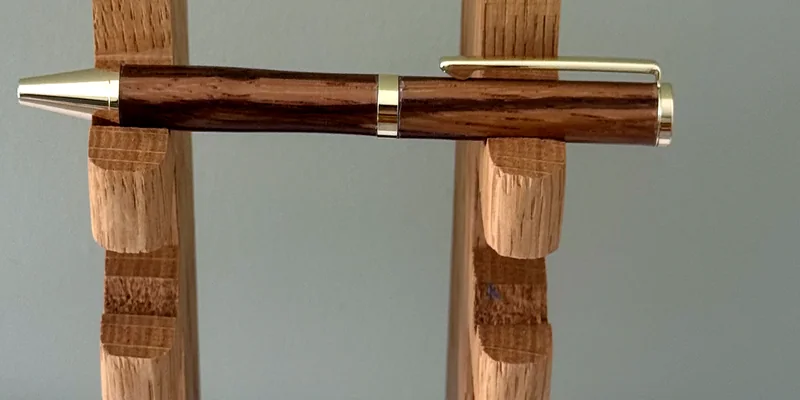
A hand-turned ballpoint pen in Zebrano
Zebrano
No supplement
Pale gold with hard dark stripes. Nobody is undecided about zebrano.
Plus £5

Exotics

Bought at retail in small blanks. Livelier grain and more colour, and generally harder and oilier, which means they polish up beautifully and blunt the tools rather faster.
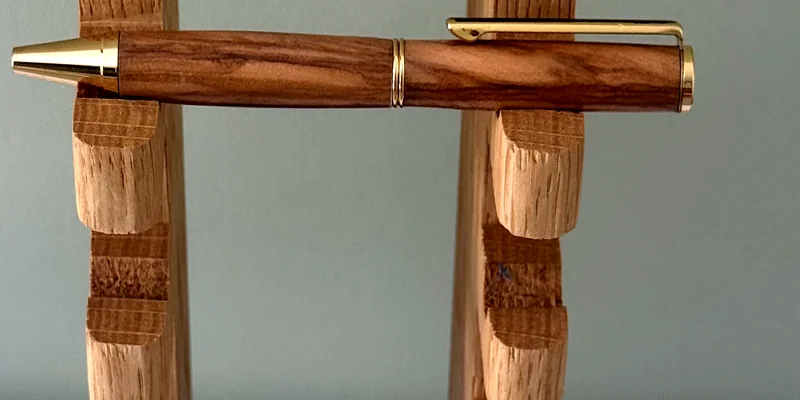
A hand-turned ballpoint pen in Olive
Olive
+ £5
Wild, swirling grain in cream and olive-brown. No two blanks remotely alike.
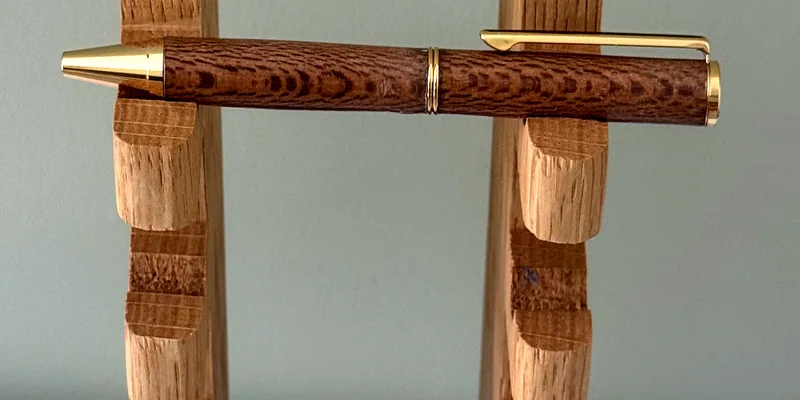
A hand-turned ballpoint pen in Plane
Plane
+ £5
Lacewood. Flecked all over with tiny pale rays, like a fish scale.
A hand-turned ballpoint pen in Bolivian Rosewood
Bolivian Rosewood
+ £5
Violet-brown with dark ink lines. Takes a glassy polish.
A hand-turned ballpoint pen in Chacate Preto
Chacate Preto
+ £5
Dense red-black African timber. Very fine, very even.
A hand-turned ballpoint pen in Chechen
Chechen
+ £5
Caribbean rosewood. Orange, red and near-black marbled together.
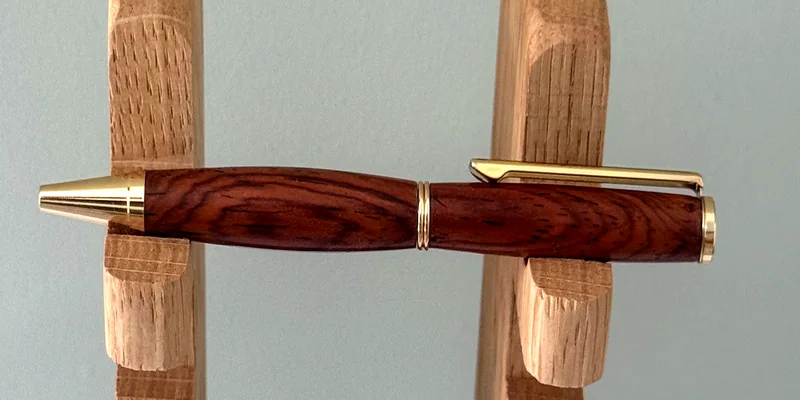
A hand-turned ballpoint pen in Cocobolo
Cocobolo
+ £5
Orange, red and black in dramatic swirls. Oily enough to shine without a finish.
A hand-turned ballpoint pen in Leadwood
Leadwood
+ £5
One of the densest timbers on earth. Dark, heavy and beautifully smooth.
A hand-turned ballpoint pen in Pau Santo
Pau Santo
+ £5
Brazilian. Olive-brown with darker veining and a faint scent when cut.
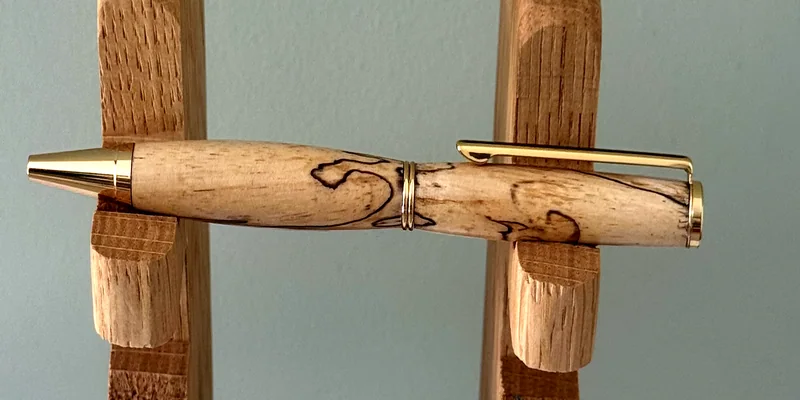
A hand-turned ballpoint pen in Spalted Tamarind
Spalted Tamarind
+ £5
Cream and grey with black spalting lines, which are fungal tracks in the wood.
A hand-turned ballpoint pen in Tasmanian Blackwood
Tasmanian Blackwood
+ £5
Golden brown with a rippling figure. An acacia, despite the name.
Plus £10 to £20

The rare ones

Small quantities and high prices per blank. Snakewood is the dearest timber I've ever bought by weight and I still think about the offcuts.
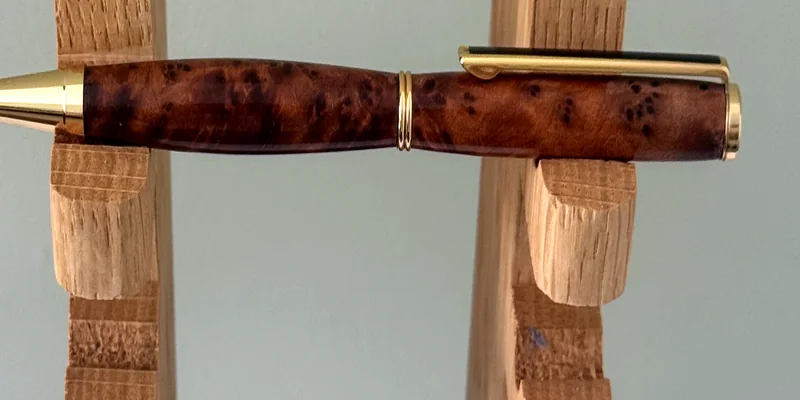
A hand-turned ballpoint pen in Amboyna
Amboyna
+ £10
Burr from the padauk tree. A riot of tiny knots and eyes in gold and red.
A hand-turned ballpoint pen in Pink Ivory
Pink Ivory
+ £10
African, and actually pink. Historically reserved for Zulu royalty.
A hand-turned ballpoint pen in Ziricote
Ziricote
+ £10
Grey-brown with black landscape figuring that looks like a coastline.
A hand-turned ballpoint pen in Snakewood
Snakewood
+ £20
The most expensive timber I use. Red-brown, covered in fine black markings.

A note on where it comes from

The home timbers are British or European and come from a sawmill twenty minutes away. Buying their offcuts is the cheapest way to get good hardwood, and it uses up wood that would otherwise be burned. I'd claim that as an environmental virtue if I hadn't started doing it because I'm tight.

The exotics come from established UK suppliers in pen-sized blanks. Nothing I buy is CITES-listed, and I use so little that one blank of snakewood lasts about a year.